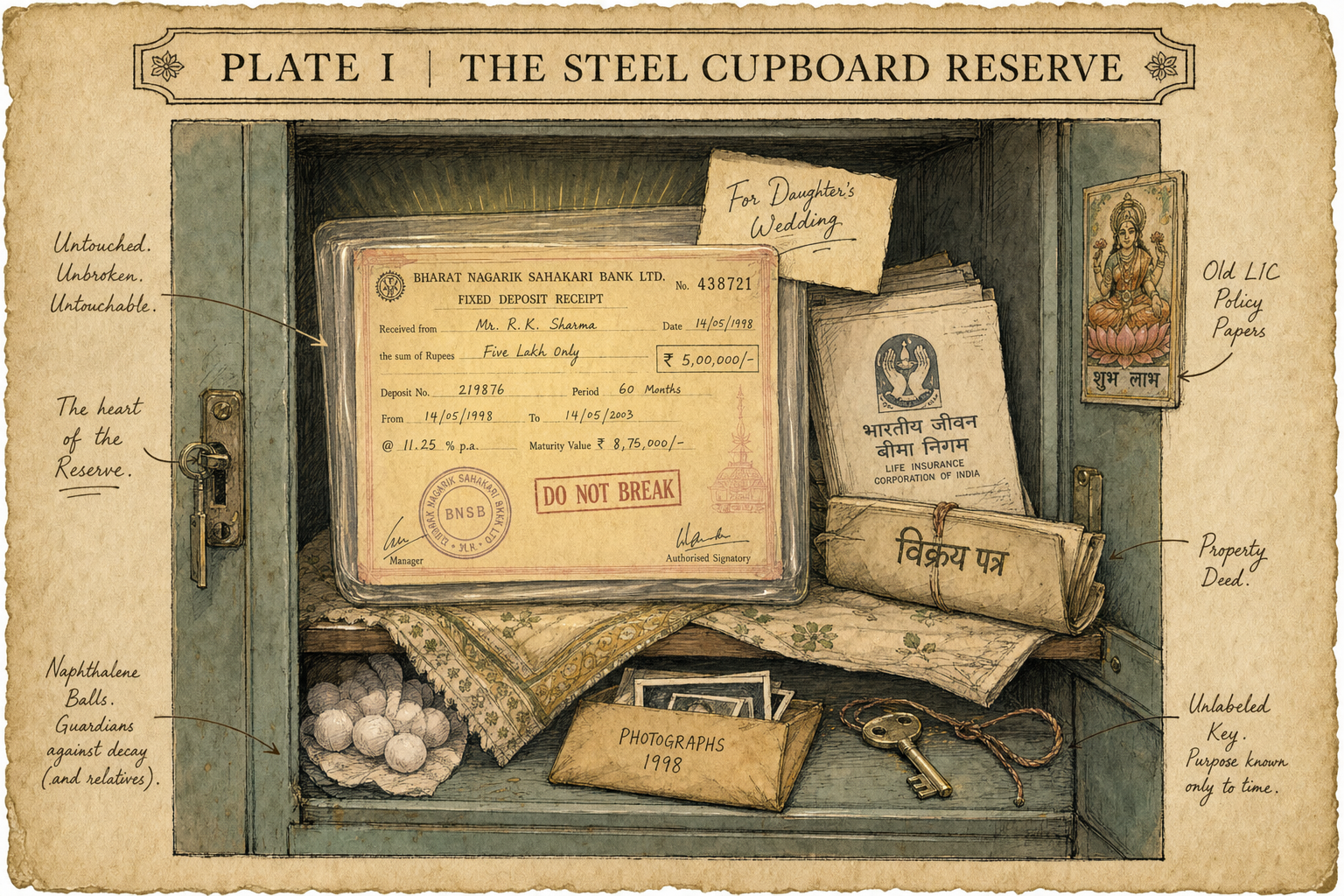
The most powerful Fixed Deposit in India is often the one nobody is allowed to touch.
You know the one. It usually lives inside a plastic folder hidden in a steel cupboard. The same cupboard that contains old LIC policies, property papers, passport-sized photographs from 1998, and at least one key whose purpose has been forgotten by everyone in the family. Technically, the money belongs to the family. Practically, it belongs to a higher authority. Nobody has written down the rules, but everybody knows them. The FD exists. It earns interest. It matures. It gets renewed. And under no circumstances should anyone suggest using it.
What's fascinating is that these FDs are rarely created intentionally. Nobody gathers the family in the living room and announces, "Today, we shall create an untouchable Fixed Deposit." It just happens. A plot of land gets sold. A retirement cheque arrives. An insurance payout comes through. A business does unexpectedly well one year. Suddenly a large amount of money appears, and before anyone can do anything adventurous with it, someone older and wiser says the most influential sentence in Indian finance:
"Put it in an FD."
Just like that, the money begins a second life.
The original purpose is usually very clear. This FD is for the daughter's wedding. This one is for retirement. This one is for emergencies. This one is for the children's education. The problem is that life has a habit of moving faster than financial plans. The daughter gets married. The children graduate. Retirement arrives and settles in. Years pass. Circumstances change. The purpose quietly disappears. The FD remains.
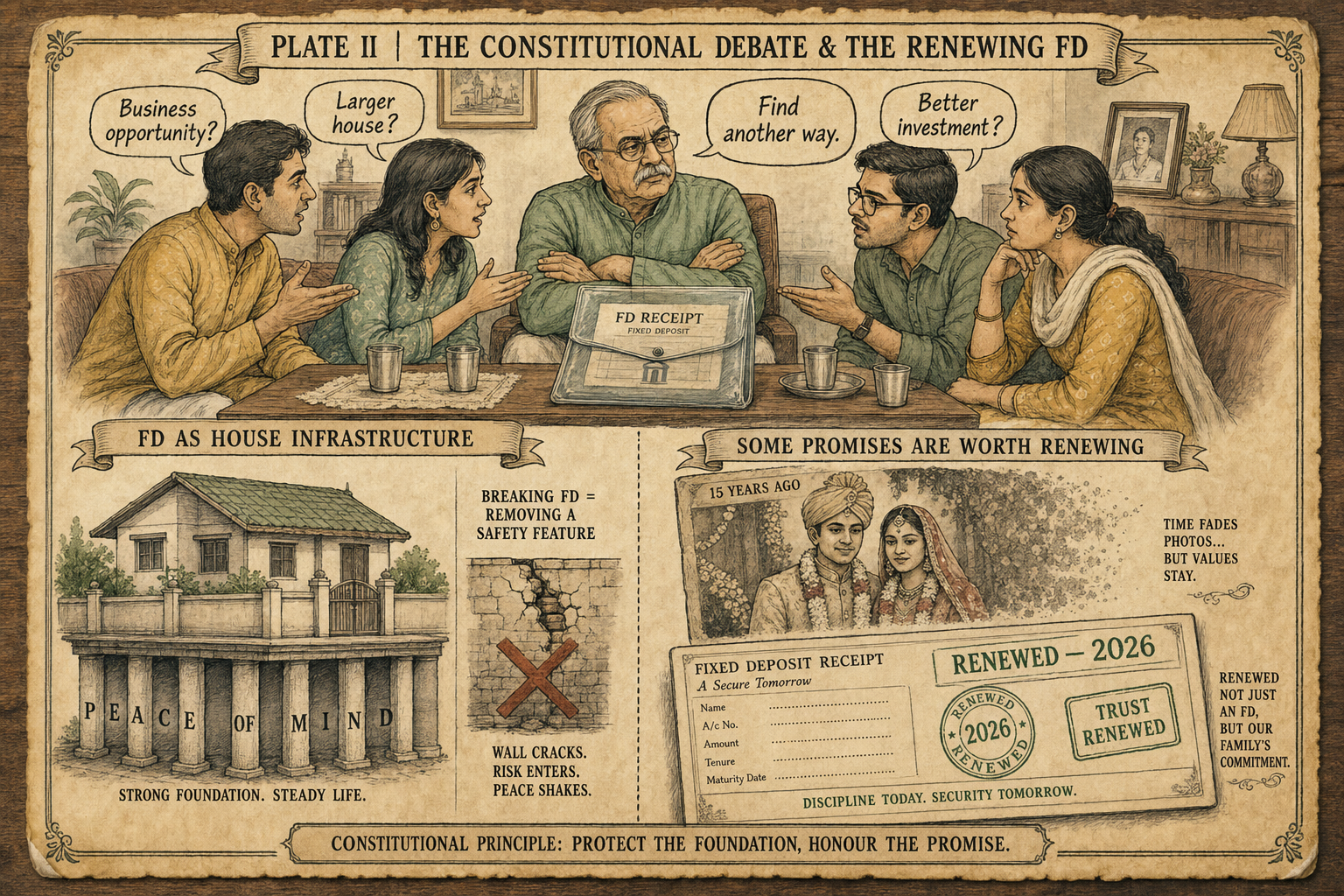
At some point, something strange happens. The family stops viewing the FD as money. It becomes infrastructure. Like the roof on the house or the boundary wall around the property. Nobody wakes up every morning thinking about it, but everyone feels reassured knowing it's there. The FD has graduated from being a financial product into becoming part of the family's emotional architecture. Breaking it feels less like spending money and more like removing a safety feature.
That's why conversations around these FDs are so entertaining. Someone eventually suggests using the money. Maybe for a business opportunity. Maybe for a larger house. Maybe for a better investment. What follows is less a financial discussion and more a constitutional debate. Suddenly every family member becomes a guardian of the reserve. Alternatives are proposed. Other sources of money are explored. Expenses are reduced. Plans are postponed. Somehow everyone agrees that almost any solution is preferable to touching the FD.
The irony is that the untouchable FD often contains the most important money in the household. Not the money with the highest return. Not the money receiving the most attention. Just the money everybody trusts. In a world obsessed with maximising wealth, these FDs serve a different purpose. They minimise panic.
And that may explain why they survive for so long. The bank thinks it's selling a Fixed Deposit. The family thinks it's buying peace of mind. Those sound similar, but they're not the same thing. One appears on a balance sheet. The other appears in the ability to sleep peacefully during uncertain times.
Which is why, somewhere in India right now, an FD created for a wedding that happened fifteen years ago is quietly renewing itself once again. Nobody knows exactly what it's for anymore. Nobody remembers the original plan. Nobody wants to break it.
And that's precisely why it's still there.