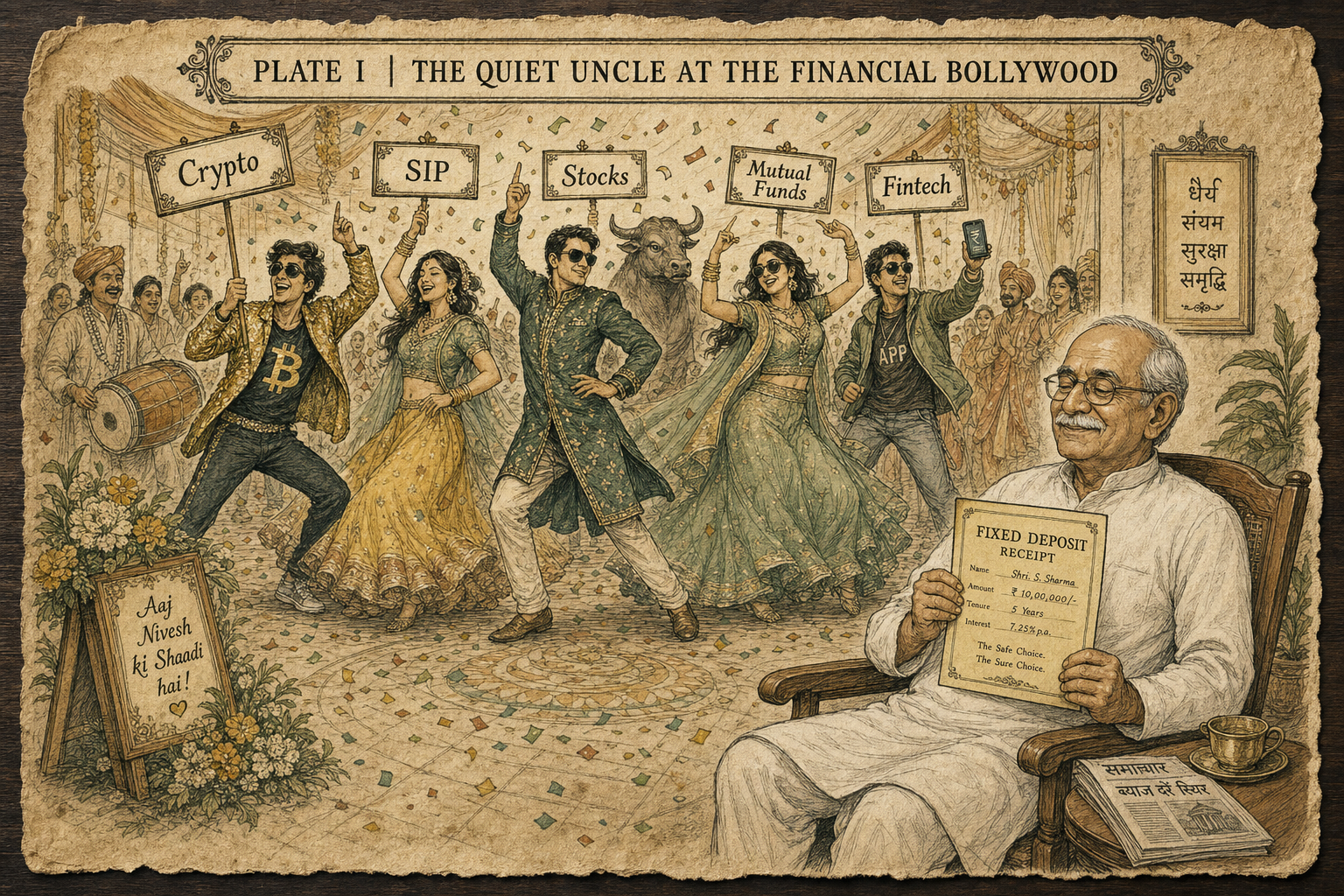
The Fixed Deposit has terrible visibility.
Nobody brags about opening one. Nobody posts screenshots of their latest FD on Instagram. There are no YouTube thumbnails screaming "THIS FD WILL MAKE YOU RICH IN 2025." If the Indian investment world were a Bollywood movie, the FD would be the uncle sitting quietly in the corner while everyone else dances around him.
And yet, somehow, it survives.
Actually, that's an understatement. It thrives.
Every few years, a new investment trend arrives to kill it. First came liberalisation. Then came equities. Then mutual funds. Then SIPs. Then fintech apps. Then crypto. Every new wave brought the same prediction: this is the end of the Fixed Deposit.
The Fixed Deposit responded by doing absolutely nothing.
Which, interestingly, is also what most people want from their Fixed Deposits.
The mistake many finance enthusiasts make is assuming that everyone is trying to maximise returns. That's true if you're discussing a ₹10,000 investment experiment. It becomes less true when you're discussing retirement money, a daughter's wedding fund, compensation received after selling ancestral land, or the emergency fund that stands between a family and a crisis.
That money has a different job.
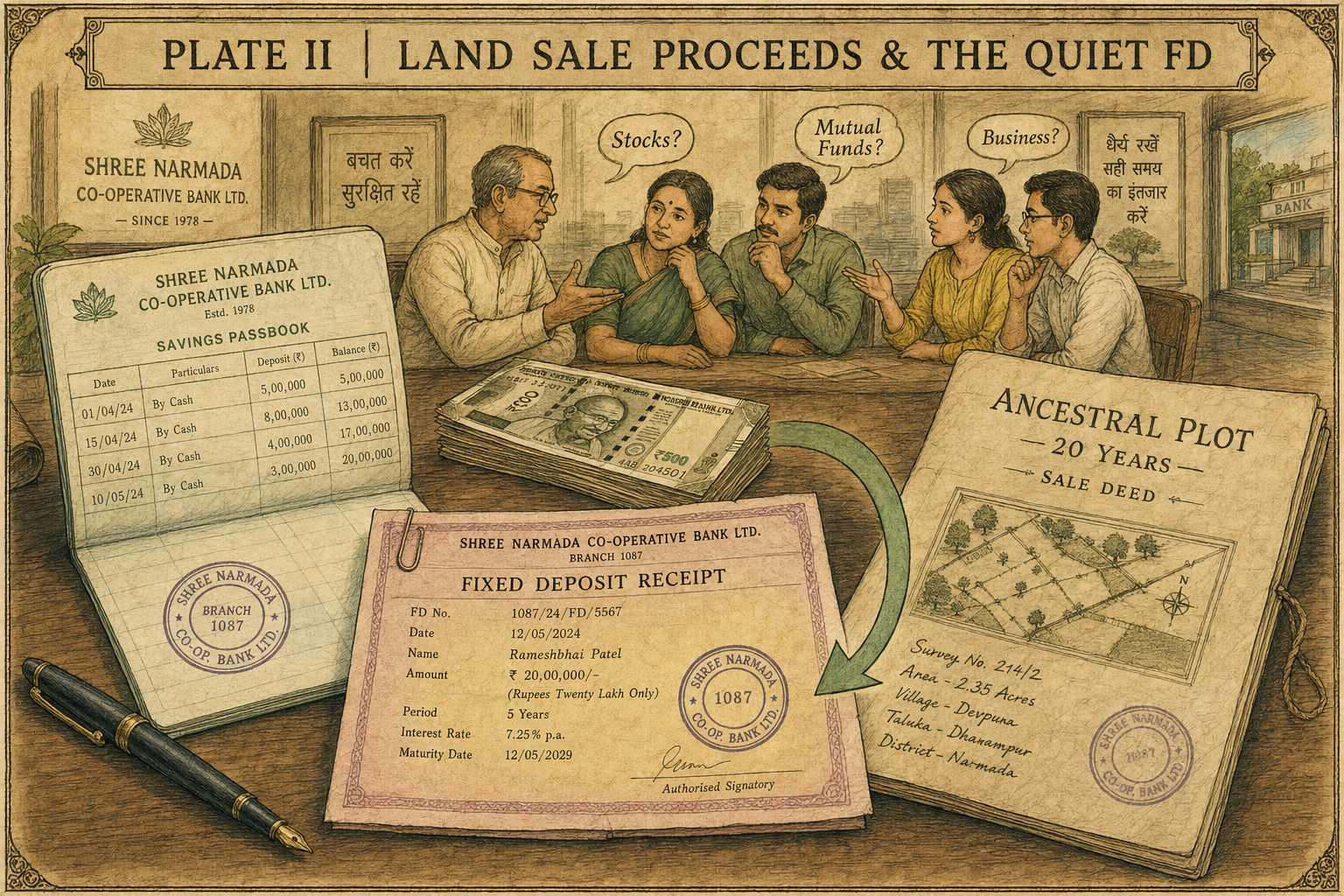
Imagine someone in a tier-2 city sells a plot of land their family held for twenty years. The money arrives in the bank account. For about fifteen minutes, everyone becomes a financial expert. Stocks are discussed. Mutual funds are discussed. Businesses are discussed. Real estate is discussed. Then a large chunk quietly finds its way into a Fixed Deposit.
Why?
Because nobody is trying to become rich from that money.
They're trying not to become poor because of a bad decision.
The FD sits in a strange category of its own. It is not exciting enough for finance influencers. It is not flashy enough for cocktail party conversations. But it continues to occupy a place in Indian households that newer financial products haven't fully replaced.
Because it offers something many people value more: predictability.
The irony is that the most important money in the house often earns the lowest return. The retirement corpus. The emergency fund. The money reserved for a wedding. The money kept aside for a medical emergency. Nobody wants that money taking risks. Nobody wants that money teaching them lessons about market volatility.
And so the Fixed Deposit survives.
Sometimes the purpose of money is not to grow.
Sometimes the purpose of money is to be there when you need it.
The Fixed Deposit built an entire reputation around that promise. And for decades, Indian families have continued renewing it.