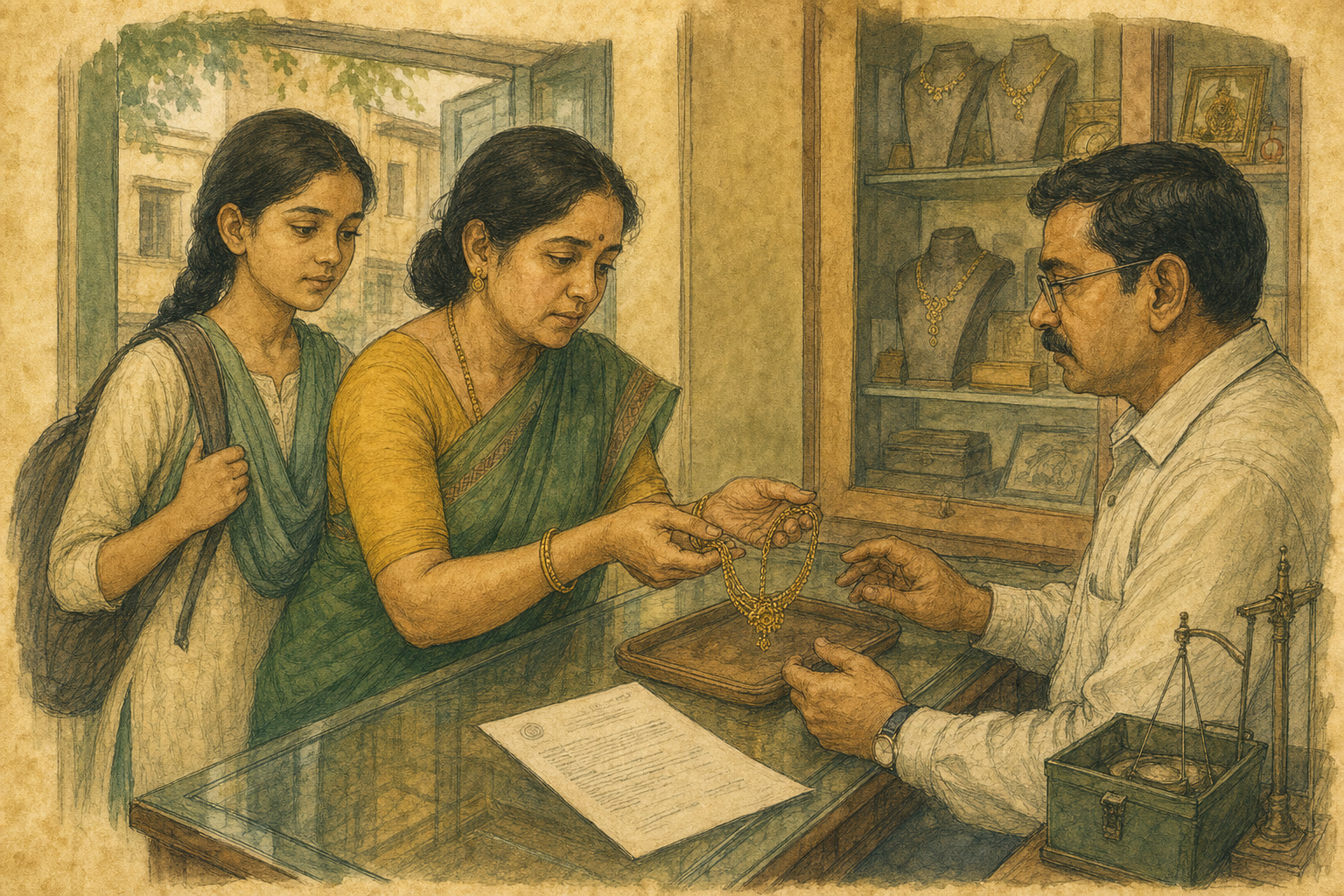
There is a reason Indian families buy gold even when they are struggling financially.
Not because they are obsessed with jewellery.
Because gold is one of the few assets in India that can become cash almost instantly.
And small-town India understood this long before fintech apps started using words like “instant liquidity.”
In a lot of middle-class homes, gold is not treated like decoration. It is treated like backup survival.
A chain bought during a wedding. Bangles collected slowly over fifteen years. Tiny gold coins bought every Diwali. To an outsider, this can look old-fashioned. Emotion-driven. Financially irrational even.
Until life goes wrong. Suddenly, you are hit with:
- A medical emergency
- A bad business season
- College fees suddenly due
- A delayed salary
- Inventory stuck
- Someone in the family needing money urgently at 8 PM
That is when gold quietly transforms from jewellery into working capital.
And this system runs across India at a scale most people do not fully realize.
In many small towns, the local jewellery shop is not just a jewellery shop. It is an unofficial emergency financial institution.
People walk in carrying gold. Walk out carrying cash.
No long explanations. No “income proof.” No waiting for loan approval emails. The goldsmith weighs the jewellery, checks purity, calculates value, and the deal is done in minutes.

Sometimes formally. Sometimes informally. Sometimes with paperwork. Sometimes with nothing except trust built over twenty years.
And honestly, this is where Tier 2 money starts looking very different from internet finance culture.
Because urban finance conversations often assume liquidity comes from apps, investments, or credit products.
But for millions of Indian families, liquidity still comes from physical assets sitting inside the house.
Gold works because everybody understands it immediately.
Selling property takes months. Businesses are difficult to value. Stocks fluctuate emotionally every day. But gold is simple. Recognizable. Portable. Universally trusted.
That trust matters in a country where financial certainty still feels fragile for many people.
And the interesting part is this is not always “desperation money.”
Small businesses use gold loans strategically all the time.
A trader needs short-term cash before festive season inventory arrives.
A shop owner needs temporary liquidity without touching savings.
A family needs funds for a few months but does not want to sell assets permanently.
So the gold gets pledged. Cash flows in. Business continues. The gold returns home later.
That is why the gold loan economy survives even after banks, fintech apps, and formal lending systems expanded aggressively.
Because the system is built on familiarity.
The local jeweller knows your family. Your father probably bought jewellery from the same shop. Your mother trusts the owner. There is social accountability inside the transaction itself.
And maybe that is why gold still feels emotionally safer than many modern financial products in India.
Because deep down, they trust assets they can physically hold during uncertain times.