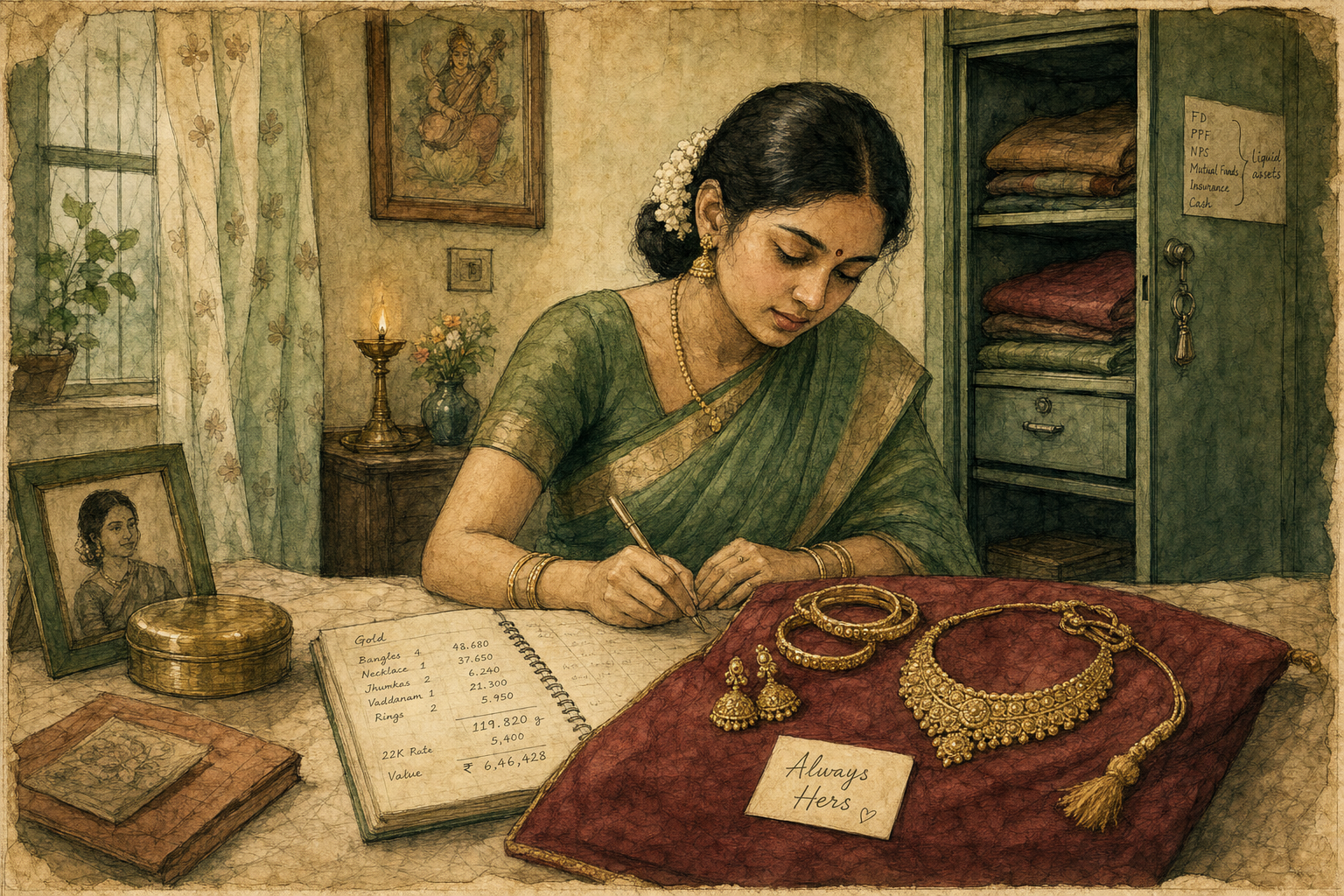
Somewhere before an Indian wedding, calculations begin.
Not the loud wedding calculations. Those everybody sees. Venue. Catering. Guest lists. Shopping videos with twenty relatives giving opinions nobody asked for.
This is a quieter calculation.
What gold will stay with her?
Maybe bangles bought slowly over years. Maybe chains accumulated during festivals. Maybe one old piece from the grandmother that nobody else was allowed to touch. Sometimes coins. Sometimes things the daughter herself has barely seen until the wedding week suddenly arrives and lockers start opening.
And everybody inside the house understands one thing very clearly.
This gold is hers.
Not the husband’s.
Not the new family’s.
Not “shared assets.”
This is hers.
Indian families rarely say this directly. But the understanding exists very strongly underneath everything.
Because deep down, many Indian parents know something uncomfortable about life.
A daughter may enter a new household emotionally trusted and deeply loved. But emotional trust is not financial independence.
And historically, across many Indian families, gold quietly became one of the few forms of wealth a woman could fully control herself.
Especially in Tier 2 India, where property was rarely put in daughters’ names, inheritance conversations stayed uncomfortable, and many women had limited independent financial access for generations.
The gold changed that equation slightly.
Not magically. But meaningfully.
Because gold does not need permission.
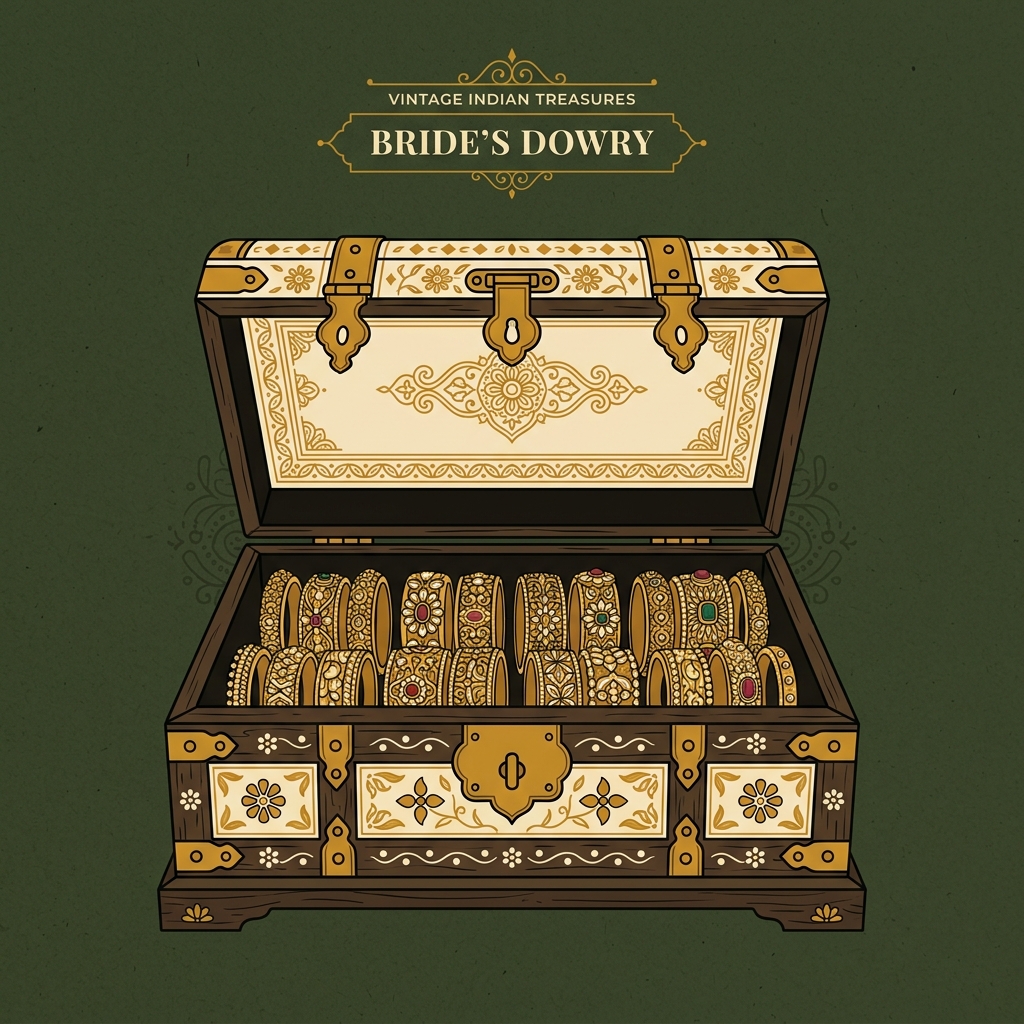
If life goes wrong, the jewellery can become money very fast. A medical emergency. A husband’s business collapsing. A sudden financial crisis. A situation where someone needs personal security urgently. Indian mothers understand this possibility instinctively even if nobody discusses it openly during happy wedding functions.
That is why the jewellery selection itself is often strangely practical once you notice it.
Families prefer pieces that are wearable but still financially meaningful. Not too flashy. Not too fragile. Designs that can survive both ceremonies and real life.
The jewellery is performing two jobs simultaneously.
Adornment and backup plan.
And maybe that is why Indian financial conversations completely misunderstand gold sometimes.
People online ask:
“Why not just give mutual funds instead?”
Because mutual funds cannot enter a wedding hall around someone’s neck.
They cannot quietly sit inside a locker for twenty years carrying emotional meaning and emergency value at the same time.
They cannot move silently across generations between women who understand exactly why the gold matters without needing a financial literacy seminar to explain it.
Because the thing being transferred here is not just value.
It is protection disguised as tradition.