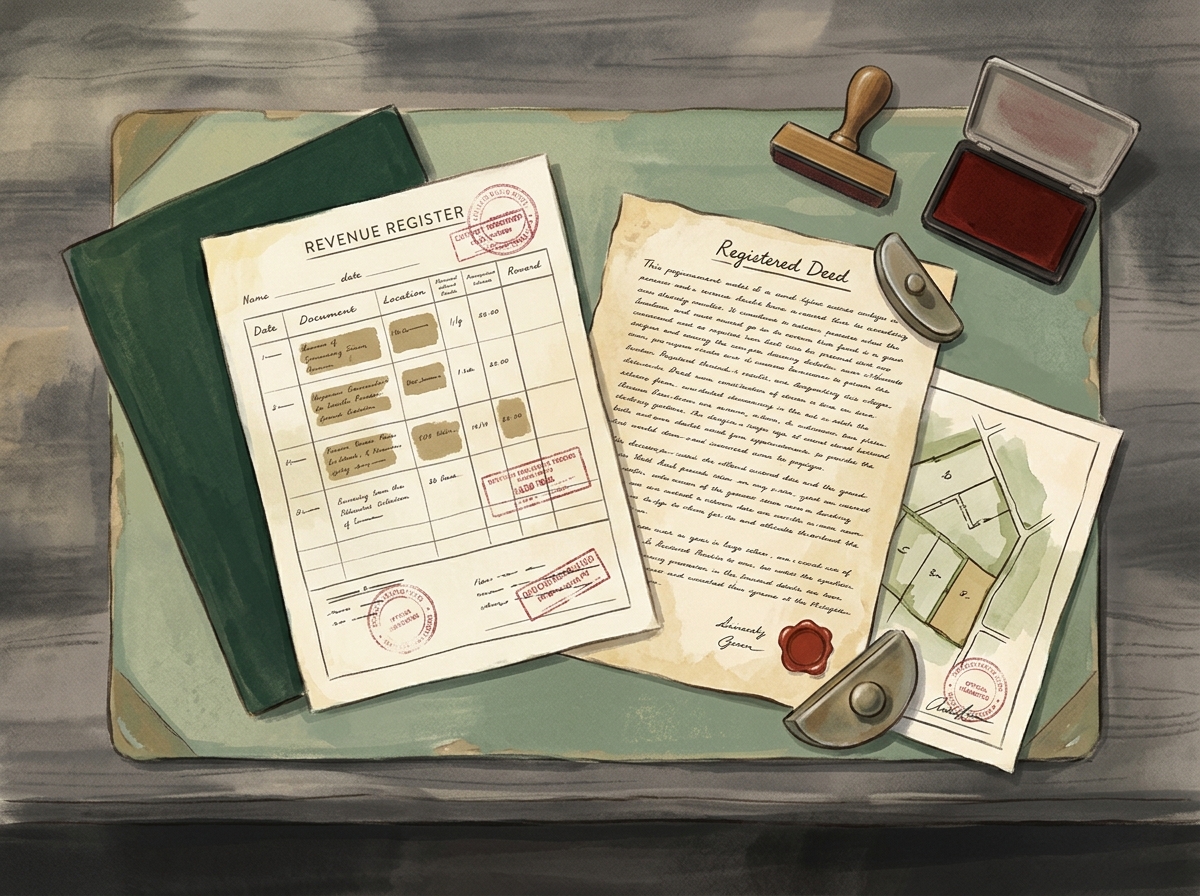
Most of us have heard, at one point or another, the urban legend of a land parcel being sold twice, the infamous "double sale."
The landowner sells his land first to Party A. Then, he sells the exact same land to Party B. Parties A and B only discover each other when trying to take physical possession of the land.
Or my personal favorite: one owner claiming a land as his own based on Document A, while another claims it is theirs by Document B. It is a real-life Khosla Ka Ghosla story.
I often wondered when I heard these tales: how is that even possible? The land record must be in a specific person's name, and upon selling, the buyer's name should replace the seller's. So, how can someone possibly execute a double sale?
It took me a while to get my head around it.
Land records do reflect reality. But they do not do it individually. They reflect reality only when read together.
Imagine this scenario:
- Owner 1, according to the Tehsil office.
- Owner 2, according to the SRO.
- Owner 3, according to the Survey sketch.
Three different documents. Three different names. Same land.
And the strange thing is, no one is lying. Everyone is simply reflecting a different administrative reality at a different point in time. They are just not in sync. So, depending on which document you start with, you will think a different person is the owner.
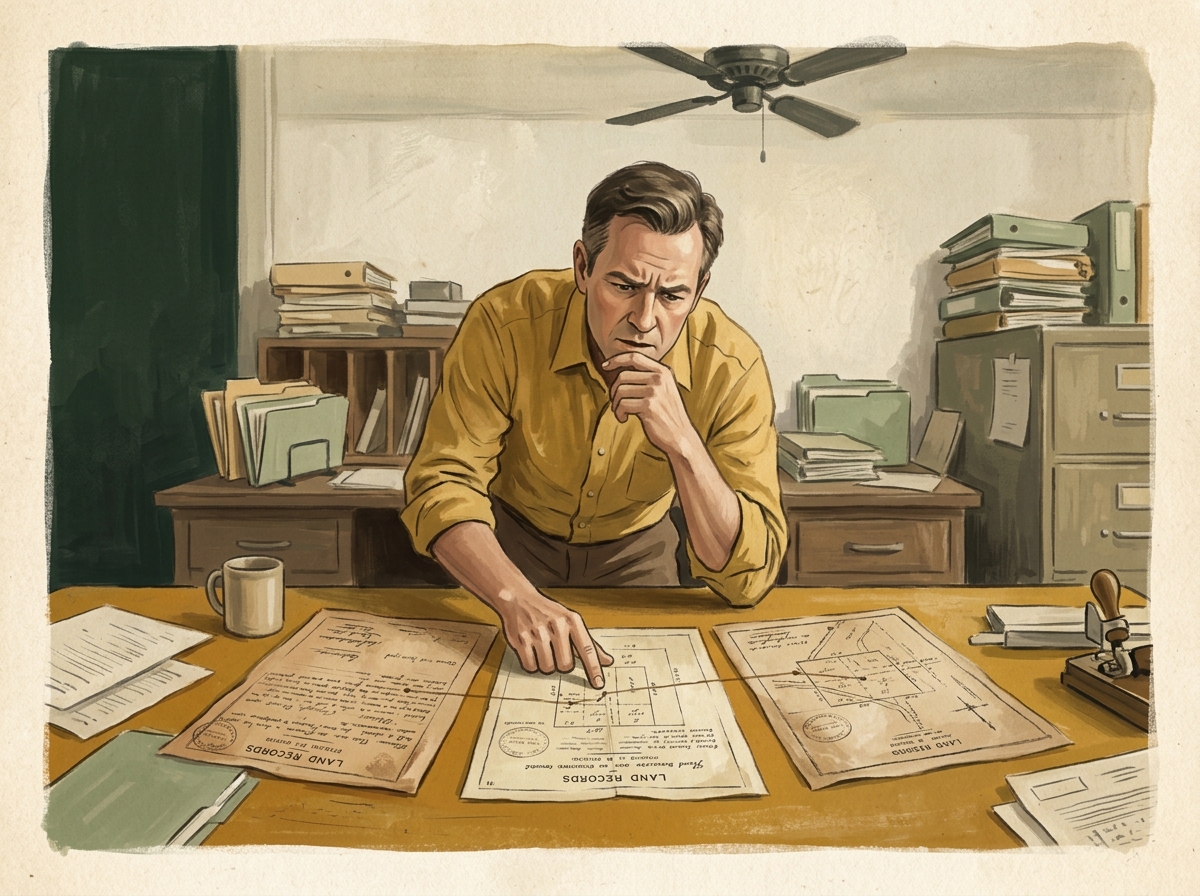
The truth is, land documents reflect reality not individually, but together.
This is where many people misunderstand land records. They try to infer ownership from a single document. That is like the ancient story of the blind men trying to understand the shape of an elephant. One touches the trunk and thinks the elephant is like a snake. Another touches the leg and thinks it is like a tree. Each person is partially right, but none of them see the full picture.
Land documents behave the same way. Each document tells part of the story. The real skill lies in assembling all the documents together and making sense of them as a system.
The good news is that most of these documents already exist. Many of them are available online, and many are free of cost. Others can be obtained from government offices for a small fee.
The difficulty is not their existence. The difficulty is assembling them together: across systems, across offices, and across time.
When you put them together, you get the true picture. When you see them individually, you see only fragments.
Property owners, unfortunately, rarely have the time or skill to put all these documents together. So they remain blind about what they own, acting only when fear or greed takes over.
Gathering these documents, some online and some from government offices, and reading them together makes the picture clear.
Land records reflect reality only when read together.