Ask anyone you know and they will have a pet story about land, how their uncle got lucky buying a plot cheap due to his connections with municipal officials, or how their neighbor got scammed because he didn't listen to his father. It is as if there is a secret, closed society whose blessing is a must if you want to succeed in real estate deals.
God forbid if you end up asking someone about their property documents. You should have a good appetite for a long, exhausting conversation about how everything is political and how the entire system is just plain broken.
And slowly, a belief sets in our minds:
Land is only for insiders.
The worst part is that this unfamiliarity with land documents shuts us off from what is actually available:
- Online portals
- Free-of-cost verifications
- Records at the Tehsil office
- Records at the Sub-Registrar's Office (SRO) for a very small fee
Land documents are not a secret. They are just scattered. Scattered across offices, across departments, across systems, and across time.
Collecting them all from different places is exhausting. So, when someone manages to assemble these documents for us, even if they are completely public, they start to feel like a magician.
That is how the "insider" myth slowly gets created. The documents are available on paper, but they are super hard to find in real life. Just because documents are public does not mean they are accessible.
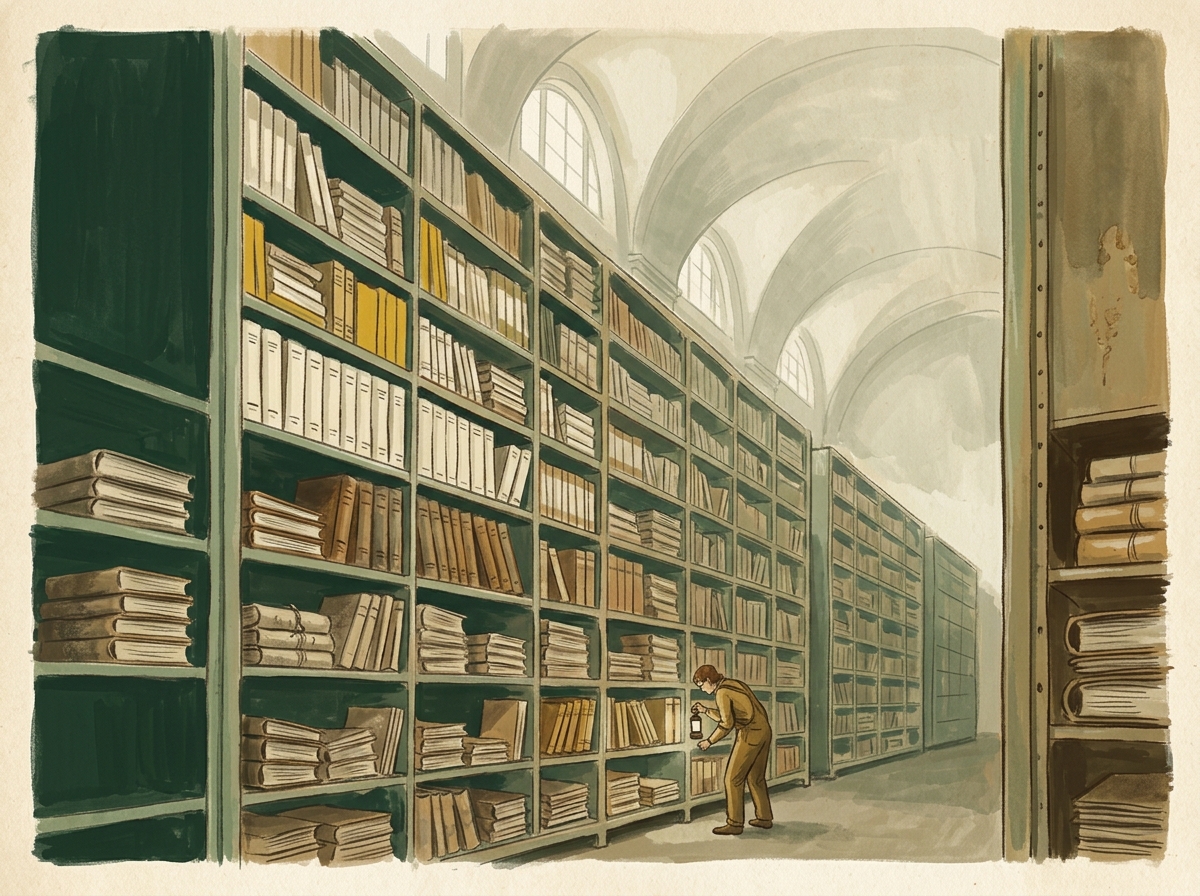
Imagine you are inside India's largest library, which has over a million books. Every book you could ever imagine is there. But there is just one small problem: there is no index available. You have to find that one specific book by searching through all of them.
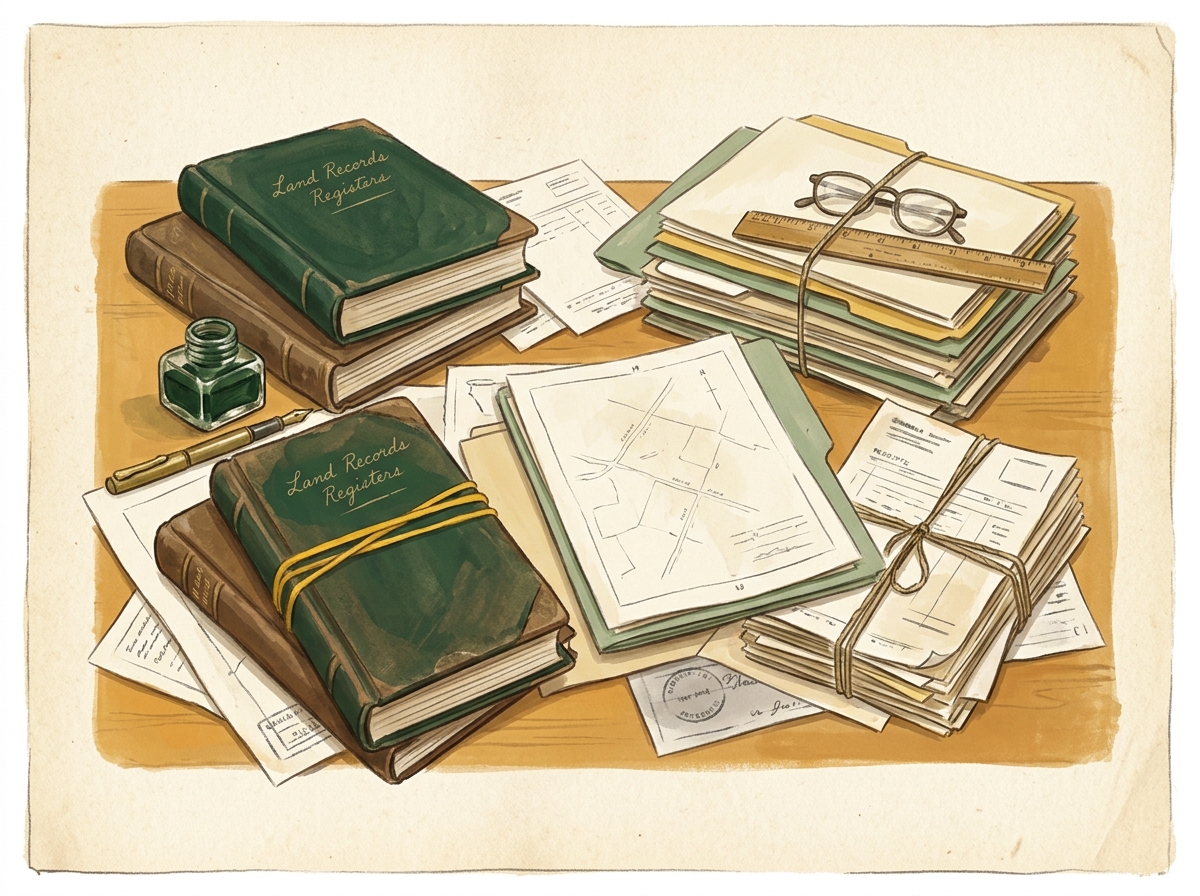
This is exactly how land documents feel: public, yet inaccessible, partly due to government design and partly due to our own unfamiliarity.
Once you see it this way, the mystery around land begins to disappear. There is no secret knowledge, and no insider information play. It is simply boring, laborious work: collecting scattered documents across systems and making sense of them together.
- Run a checklist of documents.
- Get a few online.
- Get a few from government offices.
- Put them all together.
That is all there is to the so-called "magic."
But here is the real problem: property owners rarely have the time or skill to run this checklist themselves. Hence, they usually do it only when they can't avoid it anymore, at the time of selling. If a single document is missing then, it can push the sales timeline back by three months or more.
And where our exhaustion ends, the brokers begin.
Since most people are unfamiliar with land documents, one person's lived nightmare becomes the benchmark of experience for everyone else. That is how the "insider rescuer" emerges, someone who claims to know exactly how the system works.
Ironically, the quality of land records and their availability online is significantly better today than it was five years ago. However, the difficulty lies in assembling them together, the library without the index problem.
No wonder people find it super hard to even sell their land. Any innocent oversight by the buyer or the seller in land documents can carry forward for generations, leaving everyone with a bitter feeling.
This is entirely avoidable if someone looks at the documents early and fixes what can be fixed.
Fix early. Check often. It is a boring checklist, no magic required.