Every family has a different relationship with risk.
Some people are comfortable with uncertainty as long as the numbers make sense. Some people need to physically see where their money lives. Some people trust systems. Some people trust only what they can personally verify with their own eyes, their own instincts, their own experience.
And honestly, a lot of traditional Indian families belong to the second category.
This is usually misunderstood as financial conservatism. Or worse, financial ignorance. But that explanation feels lazy. Because the issue is rarely about intelligence. It is about psychology.
Traditional money prefers tangible risk.
Not safe risk. Tangible risk.
There is a difference.
A businessman may willingly put huge money into a warehouse, a second shop, a transport vehicle, or a piece of land sitting near a developing road where nothing exists yet except dust and political promises. Objectively, all of these are risky decisions. But emotionally, the risk feels understandable. The asset is real. The uncertainty is visible. You can visit it. Inspect it. Fight over it if required.
That matters more than finance people realize.
Because most families built wealth through direct physical experience. Business inventory. Construction. Land. Manufacturing. Trading. Rental income. Years of dealing with actual humans and actual consequences. Problems had faces. Stress had locations. Losses had stories attached to them.
Even betrayal felt personal.

If a land deal goes wrong, there is somebody to blame. If a contractor disappears, you know his name. If a tenant refuses to vacate, there is at least emotional closure in being angry at a real human being instead of staring helplessly at charts and percentages.
Now compare that to modern financial systems.
Sometimes markets fall because inflation rises somewhere else. Sometimes because a central bank chairman used the wrong tone during a speech. Sometimes because two countries are threatening tariffs again. Sometimes because oil prices moved. Sometimes because a billionaire tweeted something ridiculous at 2 AM. Sometimes because investors collectively decided to become “cautious” for three days before immediately becoming optimistic again the following week.
And none of this means stocks or mutual funds are bad investments. They are incredibly powerful wealth creation tools over long periods of time. Most serious investors know that. Even many traditional families actively participate in them now.
But emotionally, it still feels strange to watch your savings react to events happening thousands of kilometers away, involving people you will never meet, making decisions you cannot influence.
That disconnect matters more than finance culture admits.
Because for a lot of Indian families, money was always tied to effort they could physically witness. Somebody opened a shop. Somebody bought inventory. Somebody negotiated with suppliers for ten years straight. Somebody stood in the sun supervising construction of a building brick by brick. Wealth felt connected to labor in a visible way.
So when money suddenly rises or falls because of global sentiment, algorithms, policy language, foreign elections, or quarterly earnings reports, it can feel emotionally unreal even if intellectually you understand the logic behind it.
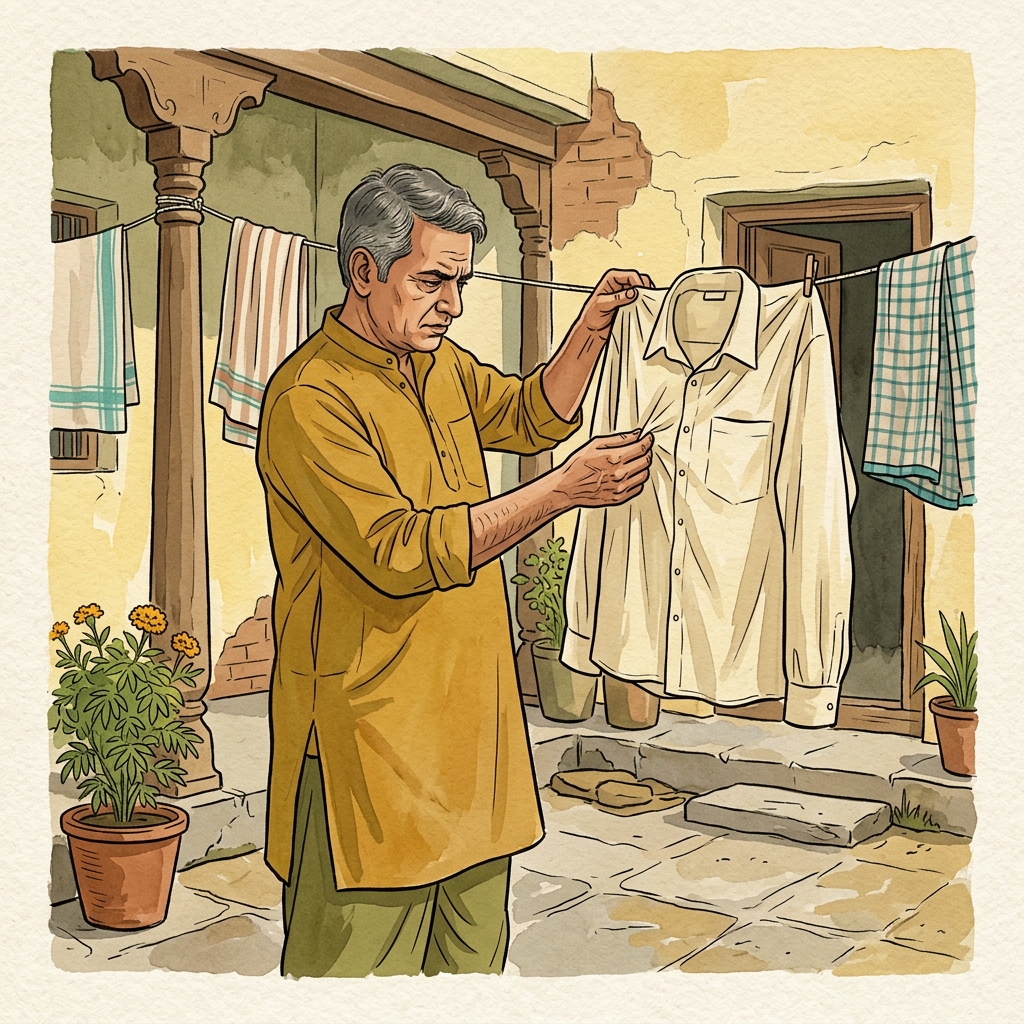
And honestly, maybe that is what the whole “who took my shirt?” feeling really means.
Not that somebody literally stole from you. Not that the system is fake. Just that human beings emotionally struggle with losses they cannot locate.
If your cousin ruins your land deal, at least you know whom to hate during Diwali.
But when your portfolio falls because three economists in suits used the word “hawkish” on television, who exactly are you supposed to fight?
The app?
The candle chart?
The economy?
At some point you just sit there staring at your screen thinking, “Okay. But who took my shirt, brother?”